Archives
May 13th Meeting @ CAES in New Haven with Alan Koch!
May 13th Meeting at the Connecticut Agricultrural Experiment Station (CAES) at 123 Huntington Street, New Haven!!
Join us for a talk with Alan Koch/Gold Country Orchids on Angraecums & Their Relatives For the Home Grower!
April 8th Meeting at the Farmington Senior CenterJoin us for Water Quality Part 2: Plant Nutrition, Fertilizer and Supplements presented by Christian Lesage!
Join us for Water Quality Part 2: Plant Nutrition, Fertilizer and Supplements presented by Christian Lesage!
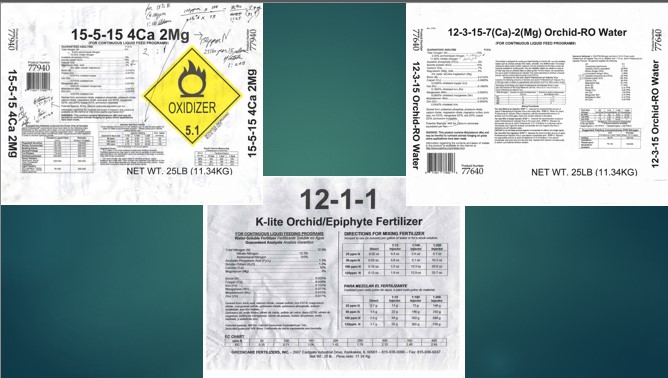
There are many water soluble fertilizers on the market, choosing the right one depends on your water quality and how that influences your substrate over time.
Meeting Date: Wednesday, April 8th at the Farmington Senior Center. Doors open at 6:00pm for socializing and the general body meeting starts at 6:30pm.
Where: The Farmington Senior Center: 321 New Britain Ave, Unionville, CT 06085
Event: Elementals of Orchid Growing Part 2: Plant Nutrition, Fertilizer and Supplements
This month we decided to shake things up and have postponed our orchid repotting meeting for another time, perhaps an orchid repotting clinic at a garden center on a weekend, which is advertised and open to the public, stay tuned. Instead, I will be presenting the second part of my talk The Elementals of Orchid Growing: A Practical and Scientific approach to demystifying watering Part 2: Plant Nutrition and Supplements. I may have been a bit ambitious with the expectation of making it through 64 slides in one evening, so we cut the talk right at the end of the discussion about how fertilizer choice affects your water chemistry. If you missed the first part of the presentation, I am working on getting that posted on our website under the Education tab.
Part 2 Plant Nutrition and Supplements will focus on tailoring your fertilizer regime to your water source and the long-term effects of your plant nutrient program on your plants, with an extensive discussion on the different types of supplements and products available to boost plant growth. We encouraged everyone to bring in water samples for testing the pH and EC as a starting point for understanding your water quality, however things did not go entirely as planning since the pH probe broke halfway through the samples and then the battery died on the unit shortly thereafter and we were unable to finish testing all the samples. The goal is to produce a chart that we can publish to the membership showing how your water sample compares to others across the state. We would like to complete that goal and if you are planning on attending the meeting, we encourage you to bring in a water sample, even if you brought one in last time two data points are better than one!
I will be bringing my combo EC (Electrical Conductivity) and pH meter (and a backup) to the meeting and encourage anyone interested to bring in water samples for testing at the end of the talk. This is a quick starting point for understanding your water quality and a good place to start making decisions about cultural practices. Be sure to use a clean uncontaminated contain such as a used plastic water bottle, fill the bottle completely and avoid leaving a large air gap at the top.
There will be a show table, so don’t forget to bring along your blooming plants for the show table. It’s always exciting to see what’s coming into bloom, looking forward to an awesome show table!
Please print and fill out the ID card for the show table here
March 11th Meeting at the Cheshire Senior Center join us for An Introduction to American Orchid Society (AOS) Judging by Lucas Carreno from J&L Orchids
Join us for a talk on AOS Judging by Lucas Carreno from J&L Orchids
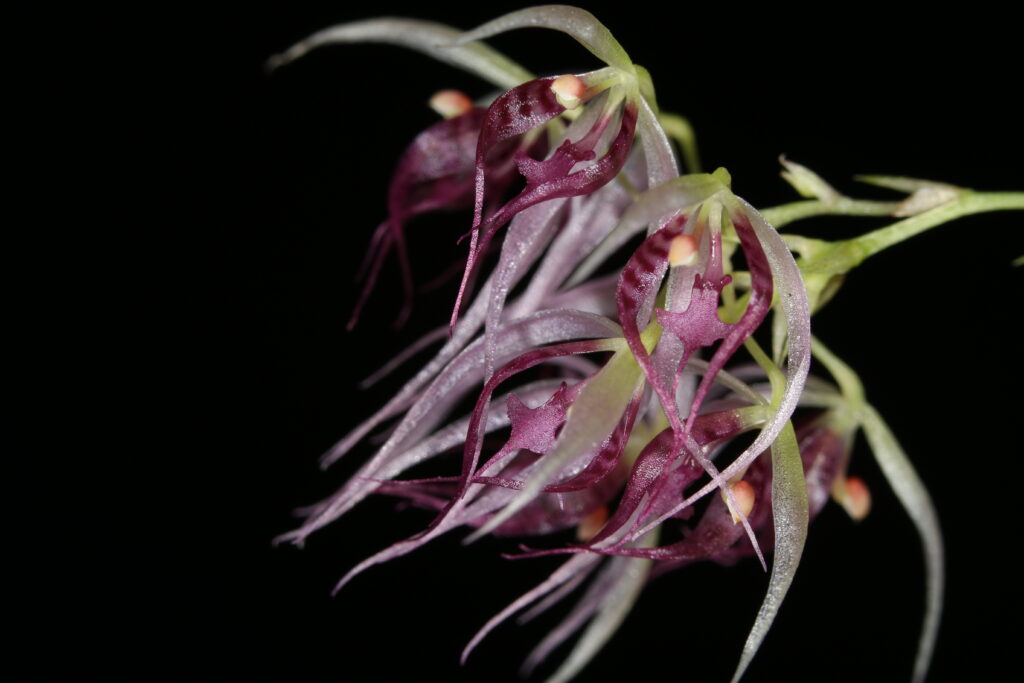 Macroclinium confertum ‘J&L’ CHM
Meeting Date: Wednesday, March 11th at the Cheshire Senior Center. Doors open at 6:00pm for socializing and the general body meeting starts at 6:30pm, with the presentation at 7pm.
Where: The Cheshire Senior Center is located at: 240 Maple Ave, Cheshire, CT 06410
Presentation: An Introduction to American Orchid Society (AOS) Judging
Lucas is a member of J&L Orchids, one of the oldest orchid nurseries in the Northeast of North America, and home to a great diversity of orchid species; he is also an accredited AOS orchid judge, involved in the program since 2017, and has personally received several awards for displays, specimen plants, and flower quality, in addition to the over 300 awards granted to J&L Orchids itself.
We’ll cover the basics of the judging process, especially regarding the different awards that are granted and the standards they are compared against, and how the audience can participate in the process.
The AOS judging program is about 100 years old, and while originally based on the Royal Horticultural Society’s orchid judging system, it has become much more structured and now focuses more on public accessibility and clarity. With about 600 judges spread around the continent, from Puerto Rico to British Columbia and frequent participation in the World Orchid Congress or South American orchid shows, there’s a great wealth of knowledge and record keeping involved.
In this talk, we’ll cover how you can look up awarded plants, how to read the records and use the information from the database, accessible for free to all AOS members, and then discuss what characteristics and factors affect if a plant may receive an award, as well as how awards are granted for displays at orchid shows, including the standards for a show trophy, or artistic and educational displays.
Please feel free to bring in plants to discuss how to transport, groom, and decide when to submit a plant for judging.
Don’t forget to bring along your blooming plants for this month’s show table. It’s always exciting to see what’s coming into bloom, looking forward to an awesome show table! See you there!
Please print and fill out the ID card for the show table here
February 11th Meeting at the Farmington Senior Center join us for a talk on Watering and Water Quality presented by Christian Lesage
Join us for a talk on Watering and Water Quality presented by Christian Lesage!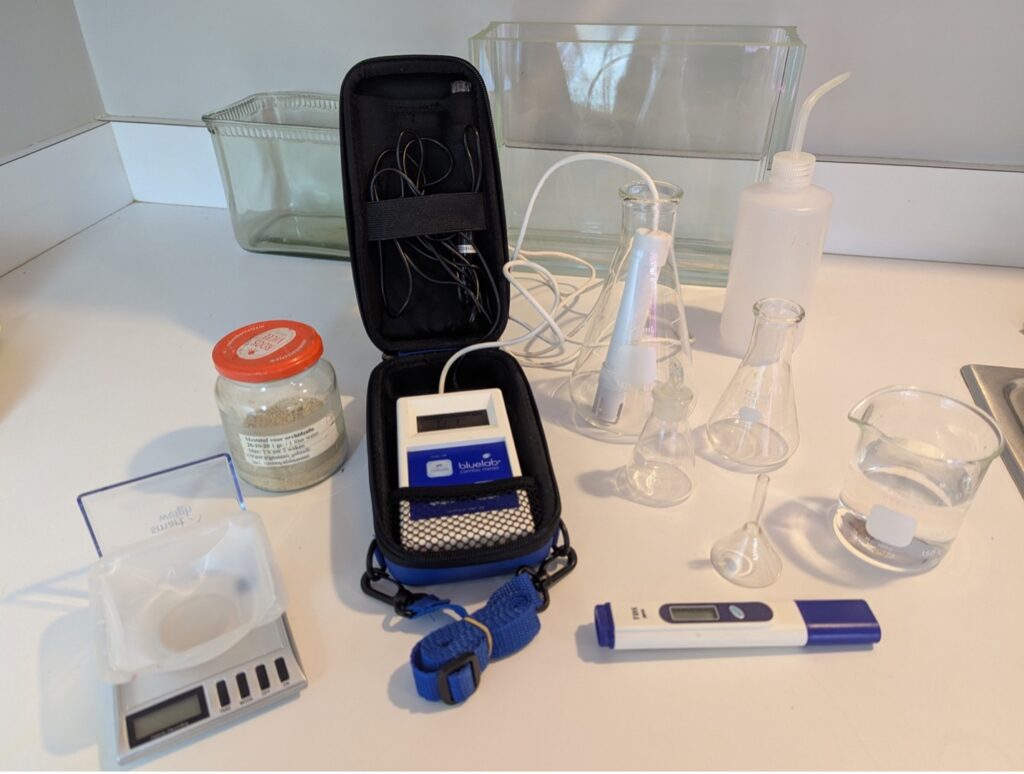
Some of the basic tools I use at home for making informed decisions about the water used for irrigating my plants with include a Blue Lab combo meter for measuring the pH and Electrical Conductivity of my water before and after adding fertilizer, a scale for measuring dry fertilizer powders, and a TDS (Total Dissolved Salts) pen meter for quick readings of the final solution.
Meeting Date: Wednesday, February 11th at the Farmington Senior Center. Doors open at 6:00pm for socializing and the general body meeting starts at 6:30pm.
Where: The Farmington Senior Center: 321 New Britain Ave, Unionville, CT 06085
Event: Elementals of Orchid Growing: A Practical and Scientific approach to demystifying watering
Unsure about watering? We all have been there, caught up in a mountain of bewildering and often contradictory information on how to water our plants. None of us want to torture our orchids, but inevitably we reach a point as a beginner or even an experienced grower where things are looking bleak and it’s sometimes unclear what caused the latest casualty. Within a droplet of water there lies an unseen world of interactions, a seemingly wizardly level of chemistry that varies from one source to another. While understanding water is only part of the picture for successfully growing orchids its often one of the most overlooked aspects of orchid culture.
As an organism we have a wide range of tolerance for variation between water sources, rarely do you consider the pH, electrical conductivity, buffering capacity, or concentration of each element in your daily intake. The groundwater and subsurface sources we tap into are generally within the range that we as an organism can safely consume. As biological organisms we are adapted to maintaining homeostasis in the face of adverse environmental conditions since we began drinking out of freshwater springs, streams, lakes, and subsurface flow. You wouldn’t drink from a saltwater body any more than from a muddy puddle, yet we thoughtlessly expect that the same water that is safe for us, is safe for our orchids.
Before we begin tackling a practical approach to water quality, consider the environment in which orchids are adapted to grow. They are broadly speaking, (for the purposes of the most common species found in cultivation) epiphytes subject to the precipitation and host effluent in their natural ecosystem. These are stable systems with predictable water chemistry, many of these plants are living off very pure water that is only modified by organic chemistry interactions. At some point you have probably heard that giving your plants rainwater is perhaps the easiest way to achieving the water quality that your plants need. And on a basic level collecting rainwater is the closest approximation we have to what these plants may be experiencing in situ. Even here we stumble since rainwater in our anthropogenically altered and foreign climate zone is nowhere near what an orchid would experience in a functional ecosystem with intact nutrient and water cycles.
Water chemistry may seem like a steep learning curve, but let’s break it down to a few simple steps. How many of you know what the pH of your water is? What is your dissolved salt content and ppm of individual elements? Are they present in the correct ratio? Are they available to the plant at your pH? How often do you need to water? How often and what concentration should you fertilize at? Lets start by looking at what constitutes good water for orchids and go over the practical steps to getting there and then closely examine the dynamic interplay between water, watering style, and substrate. This is the nuanced balance between science and art, the craft of becoming a master orchid grower.
I will be bringing an EC (Electrical Conductivity) and pH meter to the meeting and encourage anyone interested to bring in water samples for testing at the end of the talk. This is a quick starting point for understanding your water quality and an easy starting point for making decisions about cultural practices. Be sure to use a clean uncontaminated contain such as a used plastic water bottle, fill the bottle completely and avoid leaving a large air gap at the tap.
There will be a show table, so don’t forget to bring along your blooming plants for the show table. It’s always exciting to see what’s coming into bloom, looking forward to an awesome show table!
Please print and fill out the ID card for the show table here
January 14th Meeting at the Cheshire Senior Center join us for a talk on the Eric Young Orchid Foundation with Greg Griffis
Greg Griffis will be Presenting on the Eric Young Orchid Foundation
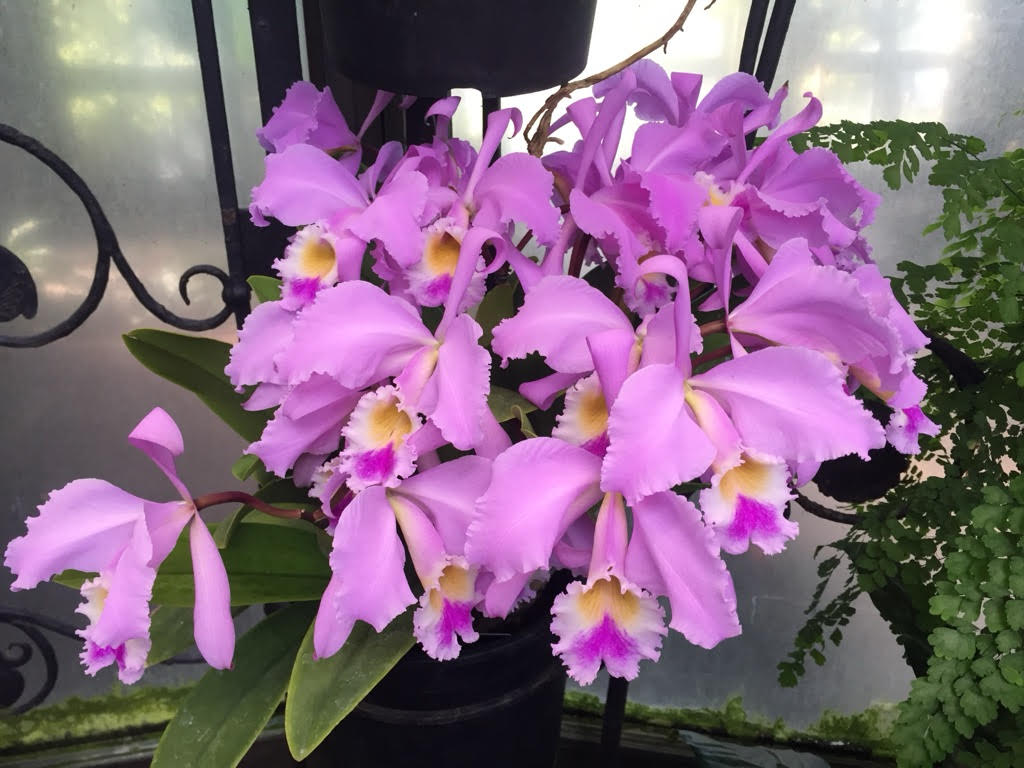 Cattleya gaskelliana at Longwood Gardens in the Orchid House
Meeting Date: Wednesday, January 14th at the Cheshire Senior Center. Doors open at 6:30pm for socializing and the meeting starts at 7pm.
The Cheshire Senior Center is located at: 240 Maple Ave, Cheshire, CT 06410
Presentation: The Eric Young Orchid Foundation – Updates and Future Outlook
For some people, an interest in plants comes from being exposed at a young age, but for people like Greg Griffis, plants became a passion a little later in life
“I grew up in a family that did a lot of gardening, but I had no specific interest in plants per se until college when a friend introduced me to orchids.”
Greg Griffis began his orchid career in 2010 as the Grower for Parkside Orchid Nursery, one of the leading retail orchid nurseries in the US, growing many different genera. From there he moved to work for Hilo Orchid Farm, Hawaii in 2011, one of the highest quality and largest wholesale orchid producers in the US, working with Paphiopedilum, Intergeneric Oncidiinae, and Miltoniopsis. In 2015 Greg began working as the orchid grower at Longwood Gardens, one of the leading US orchid collections, specializing in historic Cattleya, Disa, the Habenaria alliance, Intergeneric Oncidiinae, terrestrial orchids, and many other common genera.
There, he initiated hybridizing programs in the Habenaria alliance, Cattleya alliance, Intergeneric Oncidiinae, Paphiopedilum, Masdevallia, Disa, and more.
In 2025 Greg began his tenure as the Curator of the Eric Young Orchid Foundation, where he looks forward to advancing hybridizing and education in the orchid world.
Come with us on an exciting journey as we learn about the Eric Young Orchid Foundation, its work in hybridizing, and the outlook for the future! We will talk about hybridizing trends at the Foundation, our new projects and research, and the culture for the primary genera that we hybridize.
Don’t forget to bring along your blooming plants for this month’s show table. It’s always exciting to see what’s coming into bloom, looking forward to an awesome show table! See you there!
Please print and fill out the ID card for the show table here
December 10th Meeting at the Farmington Senior Center will be our annual Holiday Party
Join us at our December meeting for our annual Holiday Party!
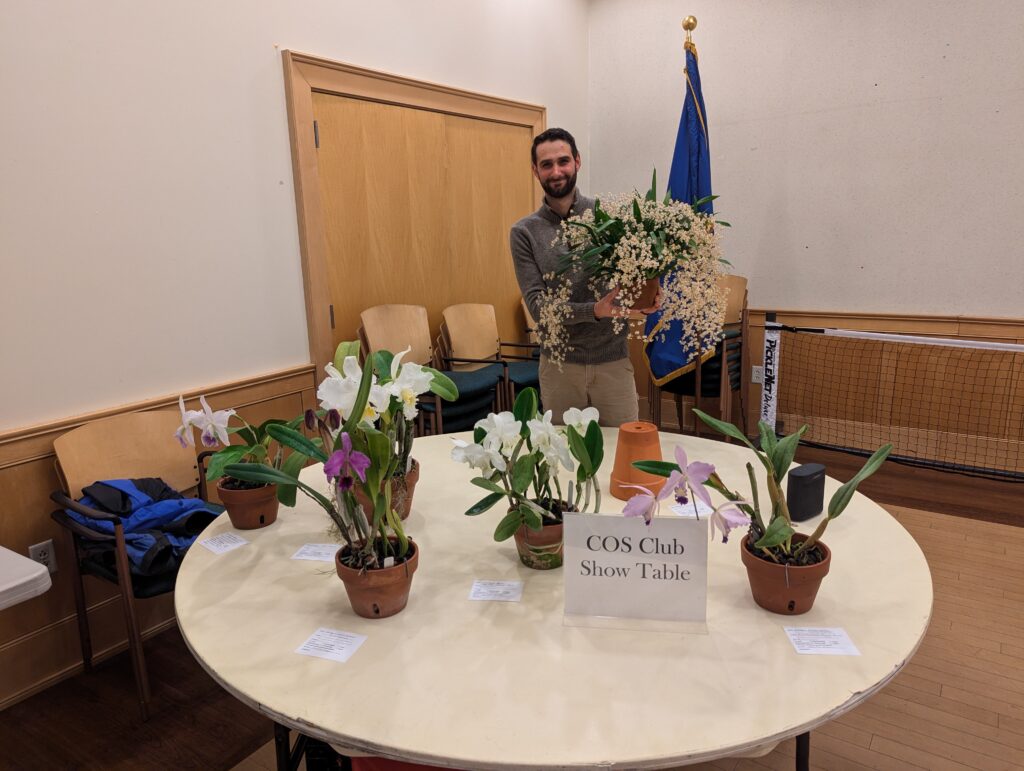
Meeting Date: Wednesday, December 10th at the Farmington Senior Center. Doors open at 6:30pm for socializing and the general body meeting starts at 7pm.
Where: The Farmington Senior Center: 321 New Britain Ave, Unionville, CT 06085
Event: Holiday Party!
This month it’s time to kick back and relax no need to take notes, it’s time to socialize, our meeting will be the annual Holiday Party at the Farmington Senior Center on December 10th at 6:30pm. As usual the club will be buying in entrees from a local restaurant and we ask that everyone bring either a side, salad, or desert. There will be a small fee of $20 per person to cover the cost of the food, and we ask that you please RSVP if you will be attending so we order enough food for everyone. If you want to attend and haven’t already signed up please do so here or reach out to Mary at ctorchidsociety@gmail.com. Last year a very merry time was had by all, join us for a dose of orchid cheer
We hope you will come on out and join us at the December meeting, there is always something new to learn, and as always, we encourage you to bring your blooming plants for the Show Table! It’s always exciting to see what’s coming into bloom, looking forward to an awesome show table! See you there! Please print and fill out the ID card for the show table here
November 12th Meeting at the Cheshire Senior Center will be a talk on utilizing online orchid resources by Bill Bodei
Join us at our November meeting for a talk by Bill Bodei on utilizing online orchid resources!
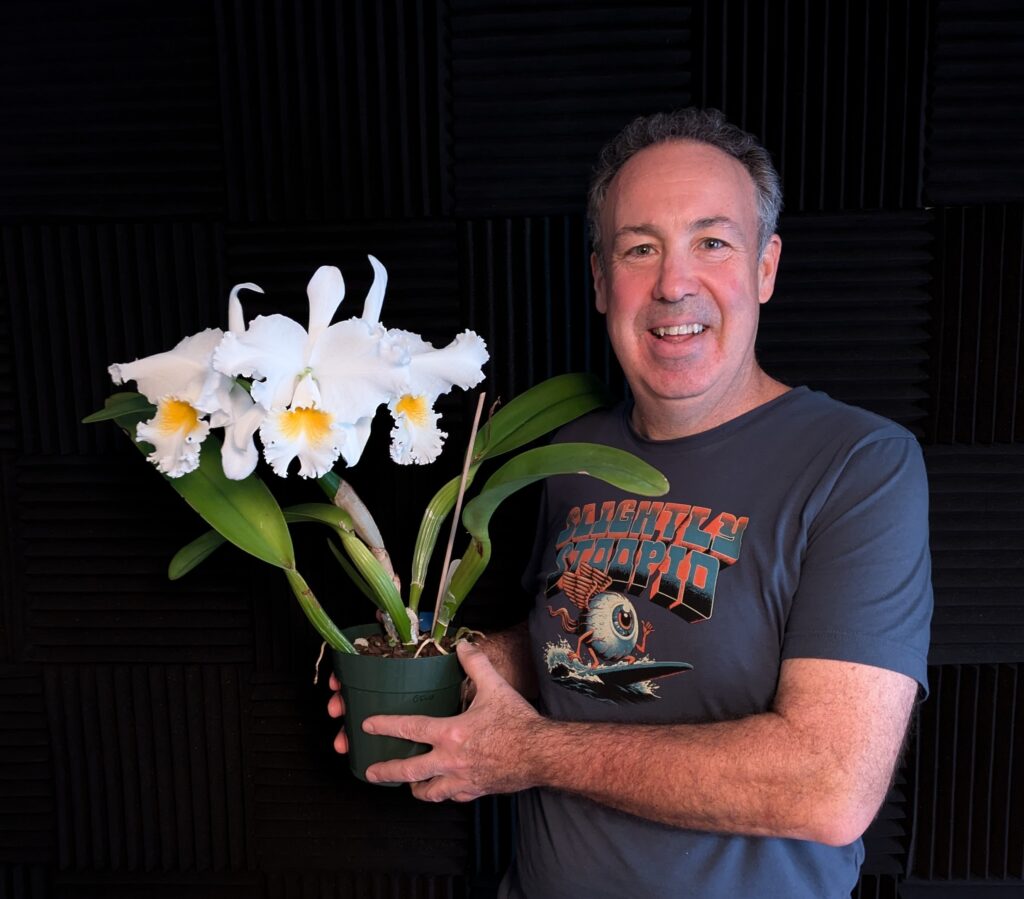
Meeting Date: Wednesday, November 12th at the Cheshire Senior Center. Doors open at 6:30pm for socializing and the meeting starts at 7pm.
The Cheshire Senior Center is located at: 240 Maple Ave, Cheshire, CT 06410
Presentation: Digital Culture – Improving Orchid Outcomes using lessons learned from the world wide web
Digital Transformation is the use of new, fast, and frequently changing digital technology to solve problems. This change isn’t limited to business. Its impact is becoming ubiquitous in our everyday lives, including our hobbies. The web is an amazing resource for orchid hobbyists! This interactive talk charts a course that allows for the non-technical user to leverage digital resources simply and efficiently. Whether it’s identifying a pest or disease issue, sharing culture experiences, or becoming a more discerning buyer, there is something in this talk for everyone from the novice to the advanced.
Our speaker William (Bill) Bodei has been growing orchids for about 16 years, maintaining a collection of > 1500 orchids of various genera including Cattleya, Vanda, Cymbidium, Paphiopedilum, Phragmipedium, Bulbophyllum, Encyclia and many others.
Bill is currently President of Deep Cut Orchid Society, and is the creator of the website, deepcutorchidsociety.org. Bill also served on the Board of Trustees of the American Orchid Society for six years and chaired the AOS Marketing and Membership committee. Bill grew the AOS Facebook group to more than 250,000 members over six years. Bill led the two year long project to completely remake the American Orchid Society website, aos.org, which launched in the spring of 2024.
Bill’s day job is in technology and software sales. Always a little bit of an IT nerd, Bill enjoys sharing what he’s learned and talking about the intersection of orchid growing and technology.
We hope you will come on out and join us at the November meeting, there is always something new to learn, and as always, we encourage you to bring your blooming plants for the Show Table! It’s always exciting to see what’s coming into bloom, looking forward to an awesome show table! See you there! Please print and fill out the ID card for the show table here
October 8th Meeting at the Farmington Senior Center will be our Annual Repotting Clinic
Join us for our Annual Re-potting Clinic
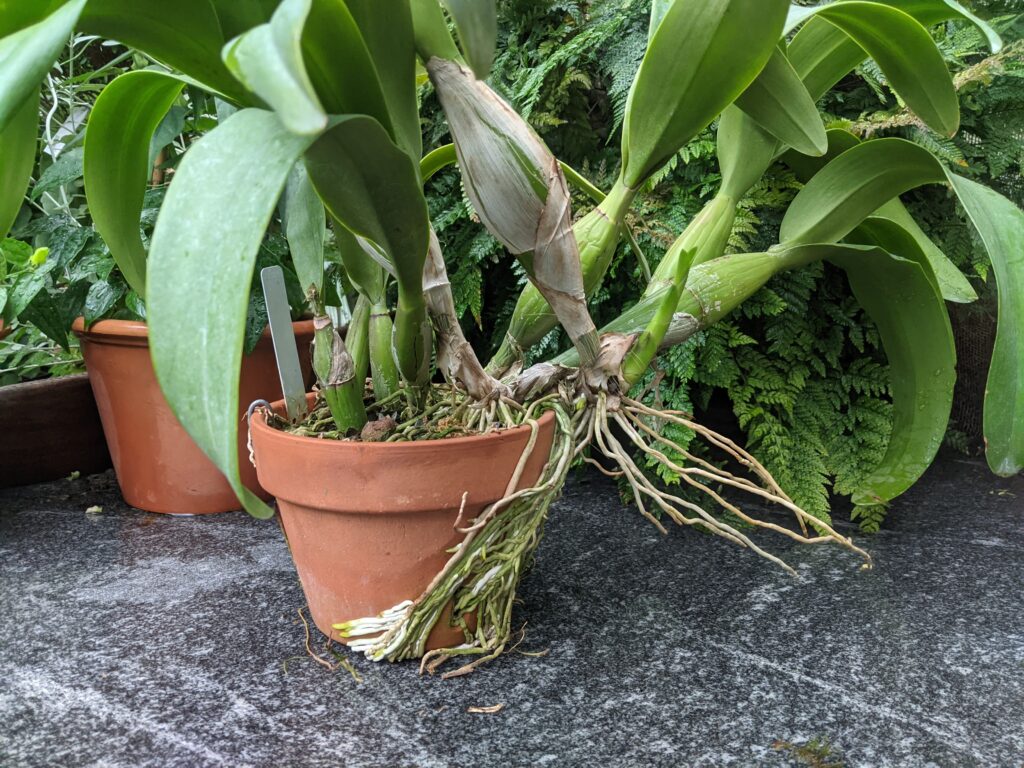
Meeting Date: Wednesday, October 8th at the Farmington Senior Center. Doors open at 6:30pm for socializing and the meeting starts at 7pm.
The Farmington Senior Center is located at: 321 New Britain Ave, Unionville, CT 06085
Presentation: Orchid Re-potting Clinic
Our October meeting will be a Repotting Clinic with orchid supplies for sale! As a reminder, one of the many benefits of being a member of the orchid society is a 25% members discount on all books and supplies, I would encourage everyone to take advantage of the discount, the prices for pots, mixes, and stakes are very reasonable and you are supporting your society with your purchase! The supplies list is posted under the ‘Supplies’ tab on our website, NOT on the sidebar under the calendar, that is an outdated supplies list that we can’t seem to delete! Please reach out ahead of time to, ctorchidsociety@gmail.com if there is anything you would like us to bring to the meeting for you. We will be bringing a selection of supplies but will not have everything on the list unless it’s specifically requested. As we head into the cooler months of fall many orchids are putting on new root and shoot growth, so take advantage of this and get some repotting done! We have everything you need from pots to stakes and everything in between.
If you are uncertain or intimidated about repotting your plants or just want to join in the fun this month’s meeting should be a popular event. Bring in your overgrown plants or plants in old potting media, our orchid experts will be on hand to coach you on how to repot or divide your plant. If you would like someone to re-pot your plant for you we can also do that for a small fee of $5 per plant. This is a hands-on event so be prepared to dig in and get dirty! We will have extra pruners and repotting tools, but strongly encourage you to bring your own if you have them so we have enough to go around.
Even if you don’t have any orchids to repot, come on out and join us at the September meeting, there is always something new to learn, and as always, we encourage you to bring your blooming plants for the Show Table! It’s always exciting to see what’s coming into bloom, looking forward to an awesome show table! See you there!
Please print and fill out the ID card for the show table
September 10th Meeting at the Cheshire Senior Center Show Preparation
Join us for our September meeting where we will be going over show preparations!
When: Wednesday September 10th at 6:30 pm
Where: The Cheshire Senior and Community Center 240 Maple Ave, Cheshire, CT 06410
Meeting Info:
Our show is just around the corner, we have been busy behind the scenes making sure preparations are underway for our Show and Sale ‘Orchid Harvest’ on September 27th and 28th at the Bristol Senior and Community Center. If it hasn’t made its way onto your calendar yet be sure to save the date.
We are asking all our membership to contribute volunteer hours to make this another successful show. If you have any availability that weekend we need your help and ask that you sign up for a volunteer timeslot. We will be sending out a volunteer signup sheet to the membership, please be sure to check your email and signup through the link provided. Setup will begin on Friday the 26th in the afternoon as we put together the show and sales area ahead of the arrival of our vendors and sister orchid societies. The biggest push will take place on Friday, but we will also need volunteers to staff the show on Saturday and Sunday, tasks will include manning the society sales area, front door greeters, show monitors, raffle facilitators, etc.
At our meeting on September 10th we will be discussing volunteer roles and going over the plan for setup on Friday. If you are planning on volunteering at the Show and Sale we strongly recommend that you attend the September meeting
There will be a show table, so don’t forget to bring along your blooming plants for the show table. It’s always exciting to see what’s coming into bloom, looking forward to an awesome show table! Please print and fill out the ID card for the show table here